RC Hydrofoil Boat
My first complex independent engineering project: designing, building and testing a small surface-piercing hydrofoil boat with a deliberately simple RC control system.
The RC boat travels across the pool in a short side view. This clip has no audio.
- Hull length
- 55 cm
- My responsibility
- Complete design and build
- Core methods
- CAD, 3D printing and water testing
- Design priority
- Minimal electronic complexity
What — The objective
I wanted to build a small RC boat that could rise onto hydrofoils while keeping the electronics manageable for an early project. I chose a surface-piercing foil arrangement and used a conventional RC link to command the motor electronic speed controllers (ESCs).
I completed the project independently, including the hull and foil CAD, 3D printing, water-resistant coating, electronics integration and testing.
How — Hull and foil design
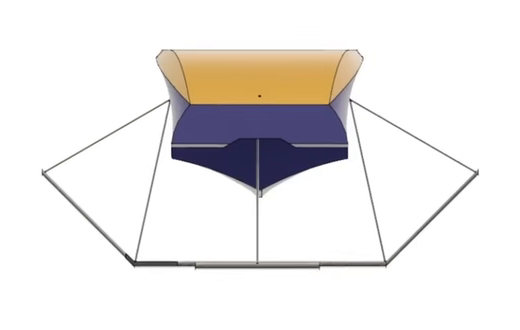
- Hull development: I used reference photographs and explored planing-hull features, including V-shaped forms, as an exercise in CAD drafting and surface development. This stage relied on qualitative design references rather than a detailed resistance analysis.
- Preliminary foil sizing: I selected a NACA section and used its lift-coefficient data for initial sizing estimates. My first design used an airplane-style foil layout with a surface-piercing main foil.
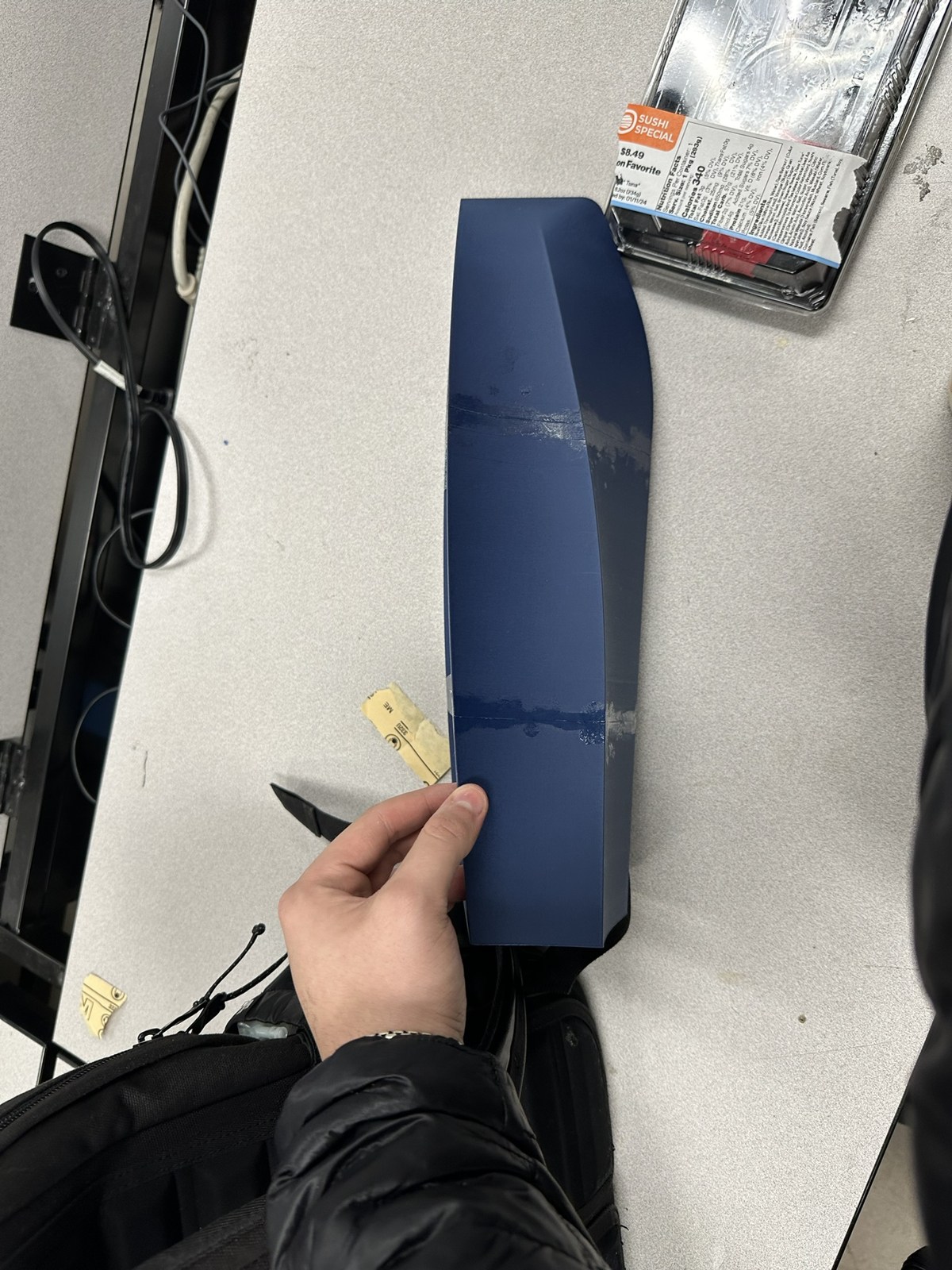
- Fabrication: I produced the components through 3D printing, explored different printing practices and applied a water-resistant coating.
- Integration: I assembled the hull, foils and propulsion electronics, keeping the motor controls as simple as possible.
How — Testing and tuning
The main challenge emerged during the transition onto the foils. In water tests, the boat accelerated rapidly as it lifted. A throttle setting that helped it reach lift-off could then cause it to rise too far and leave the water.
I worked through repeated testing and fine-tuning. The lightweight prototype remained difficult to control during this transition and could jump clear of the water instead of maintaining a smooth ride.
Fit and finish were another limitation. Inconsistent tolerances in my design and fabrication made it harder to produce accurate fits and a well-finished assembly.
More water testing
Indoor pool trial
The RC boat moves across an indoor swimming pool with its foil arrangement visible. The clip has no audio.
Continuous pool run
The boat passes beside the pool edge and continues away along the swimming lane. The clip has no audio.
Outdoor pool trial
The assembled RC boat moves across an outdoor pool, with the hull and foil arrangement visible. The clip has no audio.
Why — Outcome
I independently designed, built and tested a boat that achieved foiling. Ride quality and control were the main limitations: the lightweight prototype was sensitive to throttle input and prone to jumping out of the water.
Testing showed that achieving lift-off and maintaining predictable foilborne behavior required different levels of refinement. The project also made the importance of dimensional precision and systematic testing clear.
Lessons for the next iteration
- Define tolerances early. Even a prototype needs deliberate dimensional control and fit checks.
- Change one variable at a time. Changing several things between tests made it difficult to identify which adjustment affected performance.
- Review the assumptions behind foil sizing. In a future design, I would examine the chosen section and the applicability of its lift data more carefully before relying on preliminary estimates.